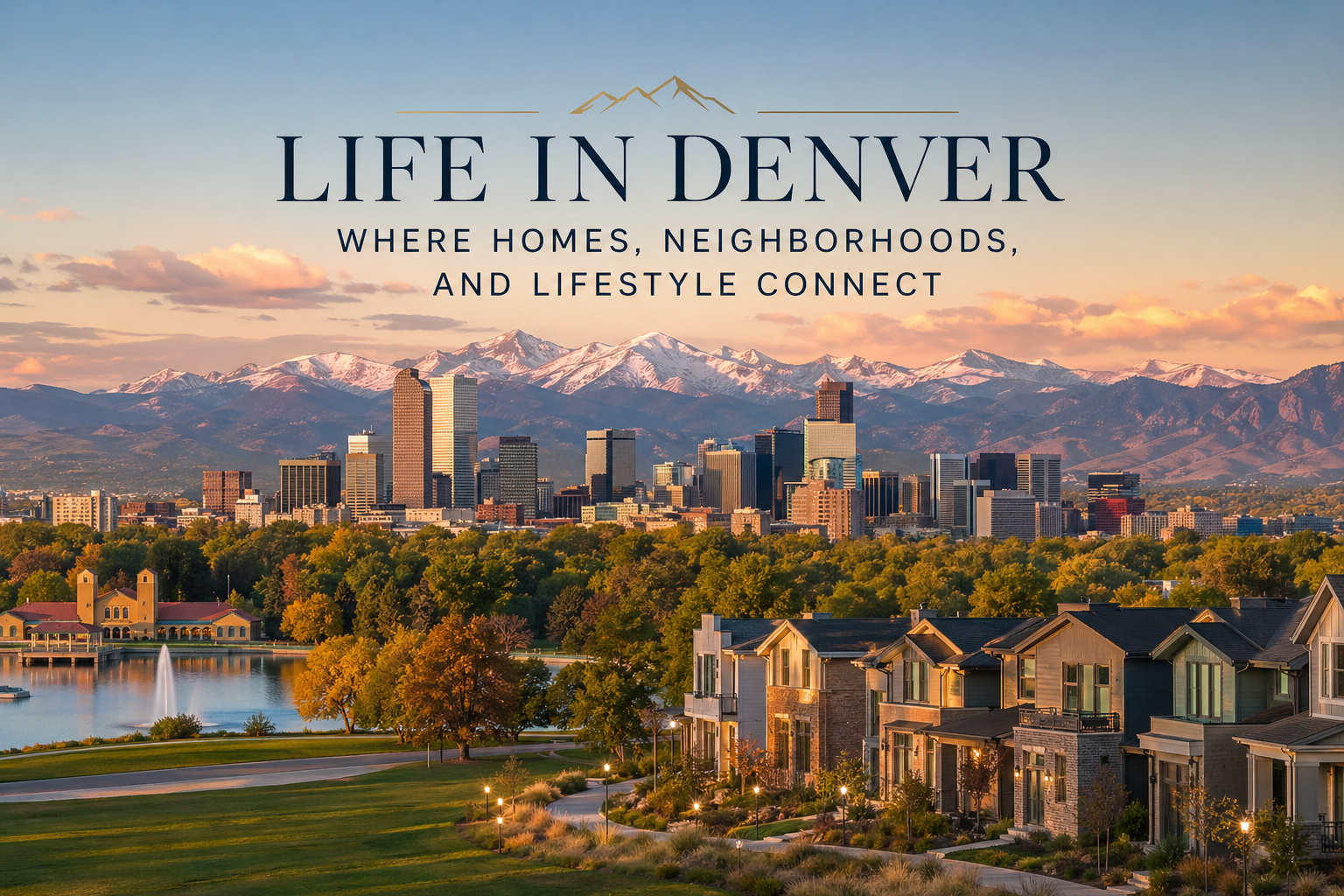
Welcome to Life in Denver: Where Homes, Neighborhoods, and Lifestyle Connect—your guide to understanding what it really means to live in one of America’s most dynamic cities.
Denver has grown far beyond a real estate hotspot. Today, it stands as a major U.S. metro known for its strong economy, outdoor lifestyle, and diverse neighborhoods. From modern urban districts filled with restaurants and culture to quiet residential communities with mountain views, Denver offers a unique blend of city living and natural beauty.
As of 2026, the Denver housing market is in a balanced phase, with more inventory available than in previous years and greater negotiating power for buyers. Median home prices typically range in the mid-$500K to low-$600K range, depending on property type and location, reflecting a stabilizing market after years of volatility.
This blog goes beyond listings. It explores real neighborhoods, lifestyle differences, housing trends, and what everyday life in Denver actually feels like.
1. The Denver Lifestyle: More Than Just Real Estate
Living in Denver is about balance—urban convenience paired with immediate access to nature.
Residents enjoy:
Year-round access to the Rocky Mountains
Hiking, skiing, biking, and outdoor recreation culture
A growing food, craft beer, and arts scene
Walkable urban districts and expanding transit options
Unlike many cities, Denver’s geography directly shapes lifestyle decisions. Proximity to trails, parks, and mountain routes is often just as important as proximity to work.
2. Denver Real Estate Market Overview (2026)
The 2026 Denver housing market is best described as stable and balanced.
After rapid growth and cooling cycles in recent years, conditions have normalized:
Median home prices generally range in the mid-$500K to low-$600K range, depending on the data source
Increased housing inventory compared to prior years
Longer days on market, giving buyers more flexibility
Fewer bidding wars except in highly desirable neighborhoods
Experts describe the current market as a “normalizing phase,” where pricing strategy and condition matter more than urgency.
👉 Buyer advantage: More options and negotiation room
👉 Seller strategy: Competitive pricing and strong presentation are essential
3. Cost of Living in Denver
Denver remains a high-cost metro compared to the U.S. average, primarily due to housing.
Key insights:
Overall cost of living is estimated to be ~28–30% above the national average
Housing is the largest expense driver
Transportation and lifestyle costs vary by neighborhood
Despite this, many residents feel the tradeoff is justified due to lifestyle benefits, job opportunities, and outdoor access.
4. Denver Neighborhoods: Choosing Your Lifestyle
One of Denver’s defining features is its neighborhood diversity.
Urban Core Living
Includes areas like RiNo, LoDo, and Cherry Creek:
Walkable lifestyle
Restaurants, nightlife, and cultural hubs
Modern condos and mixed-use developments
Traditional Residential Areas
Examples include Washington Park and Hilltop:
Quiet streets and larger homes
Established communities
Strong long-term residential value
Suburban Communities
Areas like Aurora and Highlands Ranch:
More affordable compared to central Denver
Family-friendly neighborhoods
Larger homes and newer developments
Each neighborhood offers a distinct version of Denver living, making location one of the most important real estate decisions.
5. What Drives Demand in Denver Real Estate
Several long-term factors continue to support the housing market:
Strong job growth in tech, healthcare, and energy sectors
Continued relocation from higher-cost states
High quality of life and outdoor access
Limited land availability near central Denver
These fundamentals help stabilize demand even during slower market cycles.
6. Final Thoughts: Why Denver Stands Out
Denver has matured into a balanced, lifestyle-driven real estate market.
It is no longer defined by extreme growth cycles, but by stability, diversity, and long-term livability.
Whether you are buying, investing, or exploring, understanding how homes, neighborhoods, and lifestyles connect is the key to understanding the city itself.
Check out this article next